

Why performance alone doesn’t equal a tax-smart investment strategy
If you’ve been saving and investing for decades, chances are you’ve done many things right.
But as retirement comes into focus, there’s a question many investors never stop to ask:
Do I actually have a portfolio—or just a collection of investments?
At a glance, the two can look the same. Both may show strong performance. Both may include well-known funds. But beneath the surface—especially from a tax standpoint—the difference can be meaningful.
Accumulation Isn’t the Same as Strategy
Most investors build their investments one decision at a time.
None of those choices are inherently wrong. The issue is that they’re often made independently, without ever stepping back to see how everything fits together.
Think of it like a well-stocked pantry.
Over the years, you’ve picked up quality ingredients. But having a pantry full of food isn’t the same thing as having a meal plan.
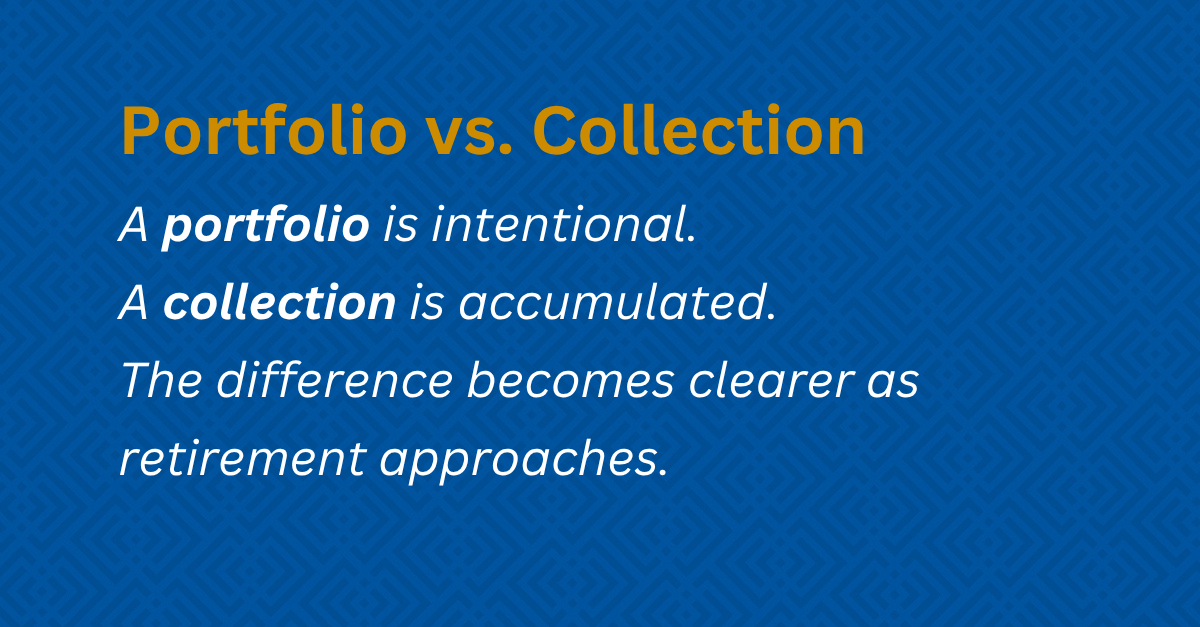
A true portfolio is intentional. Each investment plays a role. There’s a plan for how the pieces work together—especially when it’s time to start drawing income.
A collection is simply accumulation.
The False Sense of Diversification
One of the most common issues we see when reviewing investments is overlap.
In many cases, investors unknowingly own the same thing several different ways—individual stocks, index funds, and sector funds all pointing in the same direction.
On paper, it feels diversified. In reality, much of the portfolio moves together.
That risk often goes unnoticed during strong markets—and shows up quickly during downturns.
Why This Matters More After Age 55
During your working years, taxes tend to feel like a byproduct of income. There’s steady cash flow from employment & business, and investment taxes blend into the background.
That changes as retirement approaches. At this stage:
Retirement shifts the role of investments. They’re no longer just growing—they’re supporting your lifestyle. And that’s when structure matters more than performance headlines.
Strong Returns Don’t Always Mean Strong Outcomes
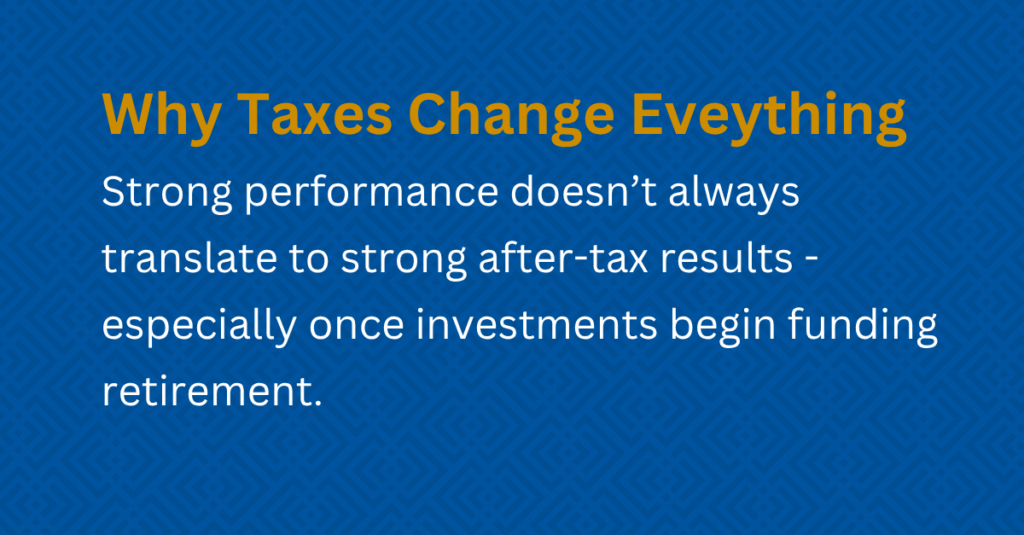
Performance alone doesn’t tell the full story—especially after taxes.
Two investments can show similar returns but deliver very different results once taxes and expenses are considered. Funds with higher turnover often create more taxable events. Over time, that tax drag quietly reduces what you keep.
You can have a portfolio that looks good on paper but produces less usable income than expected.
That difference becomes especially important when investments are funding your retirement.
Rebalancing Without a Plan Creates Risk
A coordinated portfolio starts with a target allocation across asset categories. That allocation isn’t based on what performed best last year—it’s designed to hold up across different market environments.
Rebalancing is how that balance is maintained. Done thoughtfully, it considers:
Many investors rebalance reactively—or not at all. A portfolio has a plan in advance, so decisions aren’t driven by emotion or headlines.
Timing Matters as Retirement Nears
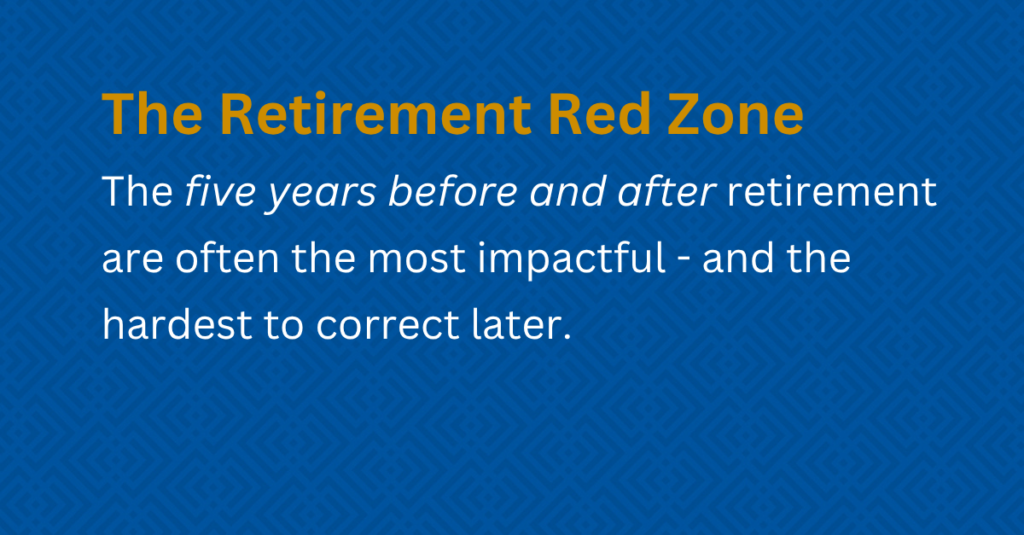
The five years before and after retirement are especially important. This is often when:
Diversification doesn’t prevent downturns. But a coordinated portfolio can help manage their impact—so retirement plans don’t need to change because the market did.
When Taxes Reveal the Gaps
During high-income years, investment taxes often feel secondary. They’re mixed in with wages or business income.
In retirement, that changes. Now:
Many investors are surprised by how much their tax picture changes once income becomes portfolio-driven.
At that point, coordination—not just value—becomes critical.
One Household, One Strategy
Another issue we frequently see is lack of coordination across accounts within the same household.
Even when each account looks reasonable on its own, the overall strategy is often less efficient when assets aren’t viewed together.
Portfolio or Collection?
You don’t need dozens of funds to be diversified. In many cases, a small number of well-chosen investments can provide broad exposure with fewer complications.
The real question isn’t how many investments you own—it’s whether they’re working together.
After decades in tax planning and wealth management, we consistently see the same issue: investments that coexist but aren’t coordinated. And that gap often becomes clear right when retirement decisions are hardest to reverse.
A Second Opinion Can Bring Clarity
A second opinion isn’t about undoing years of good decisions. It’s about stepping back to ask:
Often, clarity—not drastic change—is what makes the difference.
If you’re within 5–15 years of retirement, now is a smart time to find out whether you have a true portfolio—or just a collection of investments.
A second opinion can help reveal the difference.

The information provided is educational and general in nature and is not intended to be, nor should it be construed as, specific investment, tax, or legal advice. Individuals should seek advice from their wealth advisor or other advisors before undertaking actions in response to the matters discussed. No client or prospective should assume the above information serves as the receipt of, or substitute for, personalized individual advice.
This reflects our opinions, may contain forward-looking statements, and presents information that may change. Nothing contained in this communication may be relied upon as a guarantee, promise, assurance, or representation as to the future. Past performance does not guarantee future results. Market conditions can vary widely over time, and certain market and economic events having a positive impact on performance may not repeat themselves. The charts and accompanying analysis are provided for illustrative purposes only. Investing involves risk, including, but not limited to, loss of principal. Our opinions may change over time due to market conditions and other factors. Numerous representatives may provide investment philosophies, strategies, or market opinions that vary. The appropriateness of a particular investment or strategy will depend on an investor’s individual circumstances and objectives.
This is prepared using third party sources considered to be reliable; however, accuracy or completeness cannot be guaranteed. The information provided will not be updated any time after the date of publication.